


This article covers two key changes to reasoning control in Claude Opus 4.7, along with complete usage instructions for both the AIHubmix native API and the Chat unified interface. See also: Anthropic official announcement and model change log.
1. New Reasoning Control Features
✦ New xhigh Reasoning Effort Level
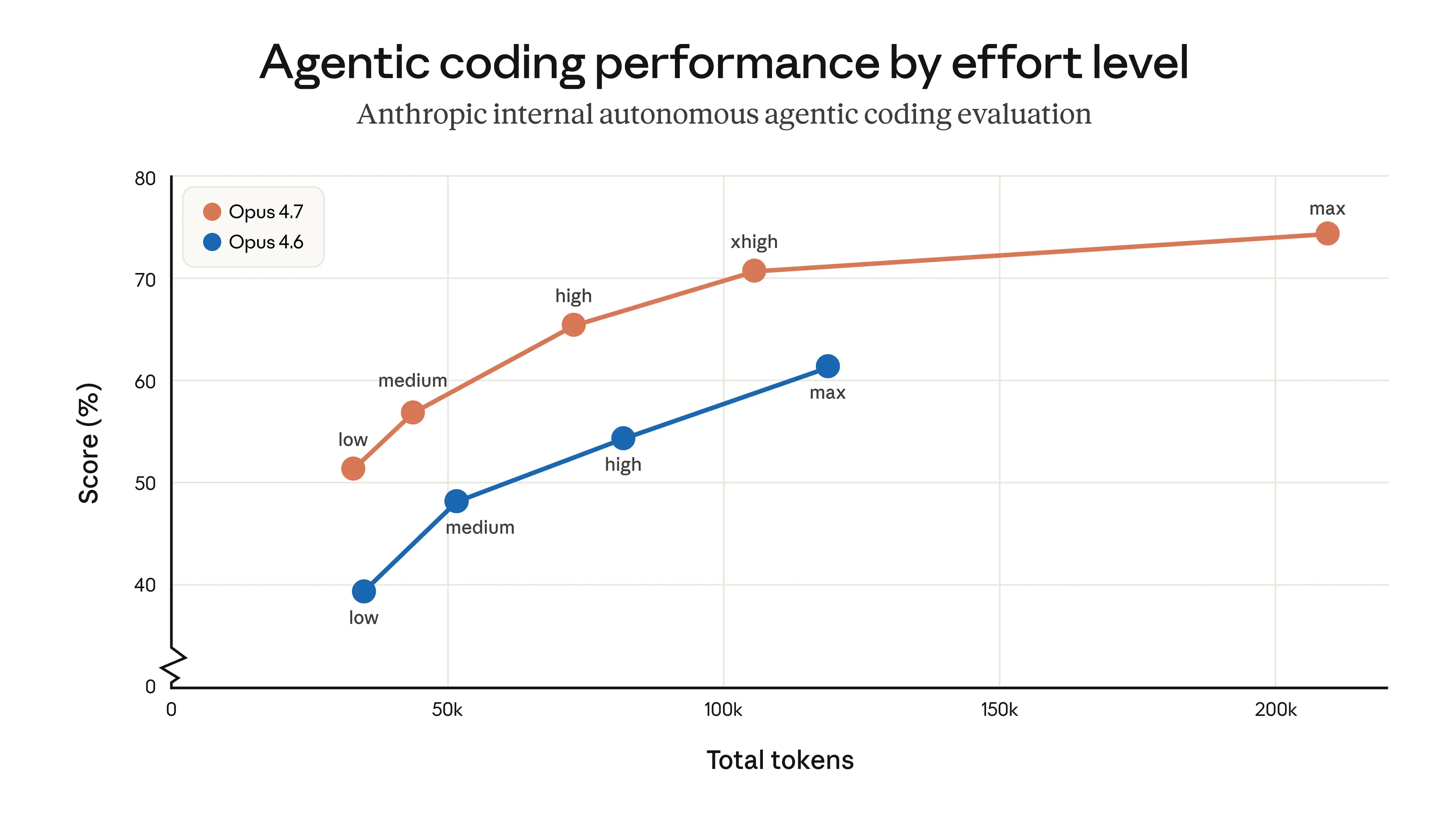
The new xhigh level sits between high and max, designed specifically for coding and agentic tasks, striking a better balance between capability and efficiency.
✦ Thinking Content Hidden by Default
In streaming responses, the thinking process is no longer shown by default. To receive a reasoning summary, explicitly pass thedisplay field in your request:
Figure: Opus 4.7 new xhigh level — Agentic coding performance comparison (Source: Anthropic official)
2. Claude Native API Reference
The effort values for the Anthropic native API are consistent com o official specification:
AIHubmix Claude Native API — Opus 4.7 Example
3. Reasoning Effort Support no AIHubmix Chat Unified Interface
The AIHubMix Chat unified interface aligns com o OpenAI specification and controls reasoning intensity viareasoning.effort. Different Claude models are automatically mapped to the corresponding effort level:
reasoning_effort (Reasoning Intensity Control) for Claude Models
Note:
xhigh is natively supported only on Opus 4.7. Other Opus models automatically fall back to max, and the Sonnet series falls back to high.
Chat Unified Interface — Opus 4.7 Example
4. Controlling Thinking Content no Chat Unified Interface
Não OpenAI-compatible interface,reasoning suporta a display field to control whether thinking summaries are returned.
Claude Opus 4.7 does not return thinking content by default. Set "display": "summarized" to enable it.